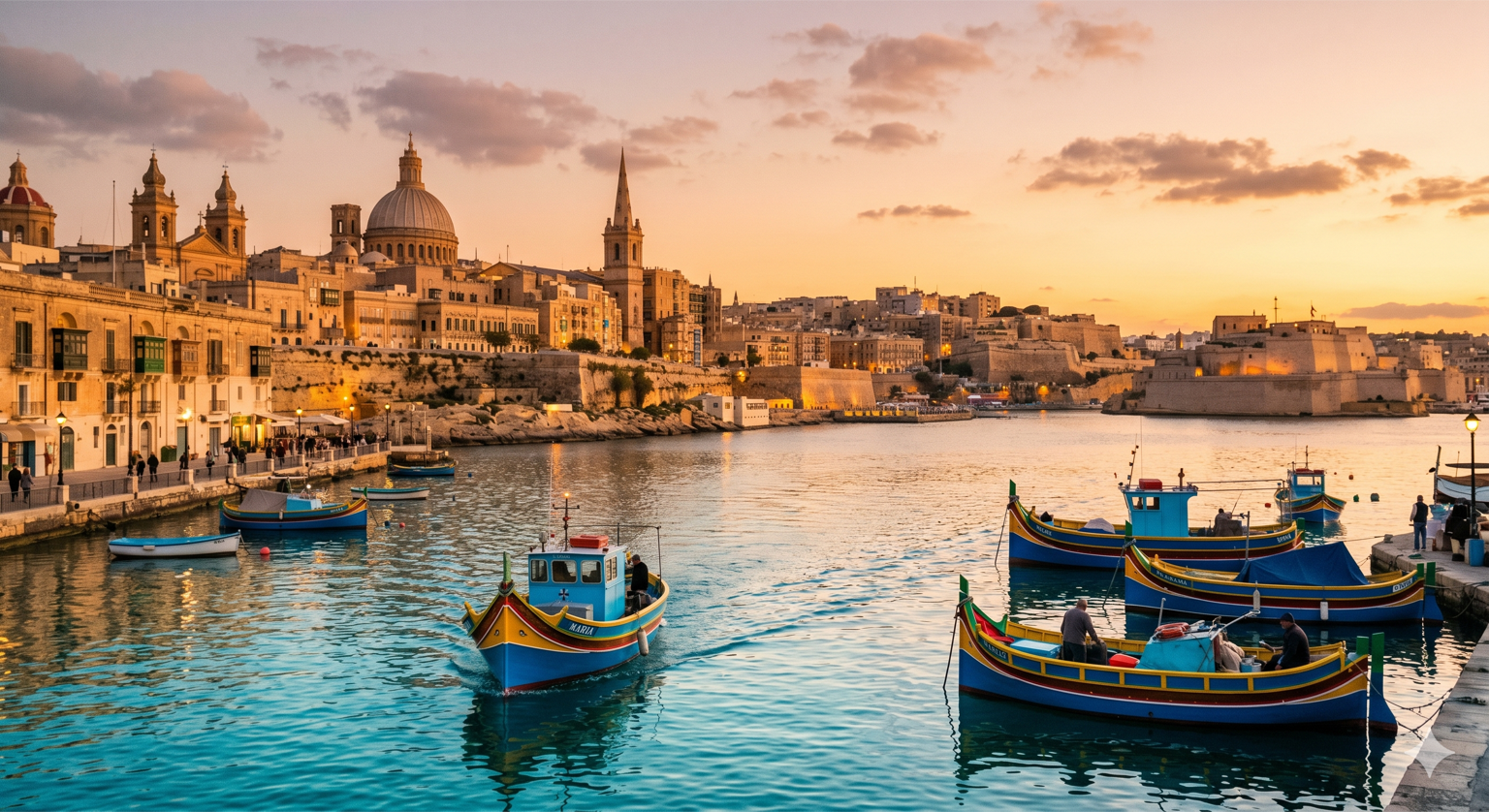
Malta is a small EU island nation in the central Mediterranean with English as one of its two official languages, making it uniquely accessible to Israeli professionals and families who are comfortable in English. The country has established itself as a hub for iGaming, fintech, and financial services, attracting international talent and investment. Immigration is primarily administered by Identità (Identity Malta Agency) and the Residency Malta Agency.
Visa and Residence Framework
Non-EU nationals wishing to reside in Malta beyond 90 days require a residence permit. The Single Permit covers employed workers under employer sponsorship. For those seeking long-term residence without active employment, the Malta Permanent Residence Programme (MPRP) provides a qualifying investment route to permanent residence. Malta applies a non-domicile tax regime for qualifying residents, with taxation based on remittances rather than worldwide income.
Pathways Covered on This Site
Work
- Single Permit — Combines a work permit and residence permit in a single document, processed by Identità (Identity Malta). Requires an employer registered in Malta who submits the application on behalf of the foreign national. Applicable to roles across all sectors, with stronger demand in iGaming, financial services, fintech, and technology.
Investment/Residence
- Malta Permanent Residence Programme (MPRP) — An investment-based permanent residence route administered by the Residency Malta Agency. Requires a government contribution (€30,000 if renting or €58,000 if purchasing property), a property commitment, and a €2,000 charitable donation. There is no mandatory minimum physical stay requirement for MPRP holders, making it suitable for those who need flexibility of movement within and outside the EU.
Key Facts About Malta
- Capital: Valletta
- Official language: Maltese and English
- Currency: Euro (EUR)
- Government: Parliamentary republic
- Population: approximately 550,000
- EU member: Yes
Living and Working in Malta
Malta's English-speaking environment is the country's defining advantage for Israeli immigrants. Government services, courts, private businesses, and schools all operate in English, eliminating the language barrier that characterises most other EU immigration pathways. The iGaming and fintech sectors are major employers of international talent, and Malta's Mediterranean climate offers over 300 sunny days per year.
Healthcare is provided through the public Mater Dei Hospital and network of health centres under GU Malta; private healthcare is widely used by expatriates for faster access. Education at public schools is conducted in both English and Maltese; international private schools are available in Valletta, Sliema, and St. Julian's. The Jewish community in Malta is very small with no established Israeli expat hub, so Israelis typically integrate into the broader English-speaking expat community.
The cost of living in Malta is moderate by EU standards, lower than Dublin or Amsterdam but higher than Eastern European EU capitals. Housing in the popular expat areas of Sliema, St. Julian's, and Valletta can be expensive relative to local wages, and it is advisable to research accommodation costs before committing to relocation.
Tax and Long-Term Residence
Malta's non-domicile tax regime allows qualifying residents to be taxed only on income remitted to Malta rather than on worldwide income. A minimum annual tax of €5,000 applies to non-domiciled residents under certain conditions. Corporate tax is nominally 35%, but the imputation refund system reduces the effective rate significantly for qualifying companies. There is no wealth tax or inheritance tax in Malta.
Permanent residence through MPRP is granted indefinitely subject to ongoing compliance. Standard naturalization for citizenship requires five years of legal residence. Specific rules and timelines should be verified with a licensed immigration attorney.
Official Resources
Disclaimer: This content is for informational purposes only and does not constitute legal advice. Immigration rules change frequently. Consult a licensed immigration attorney or accredited advisor before making decisions.